
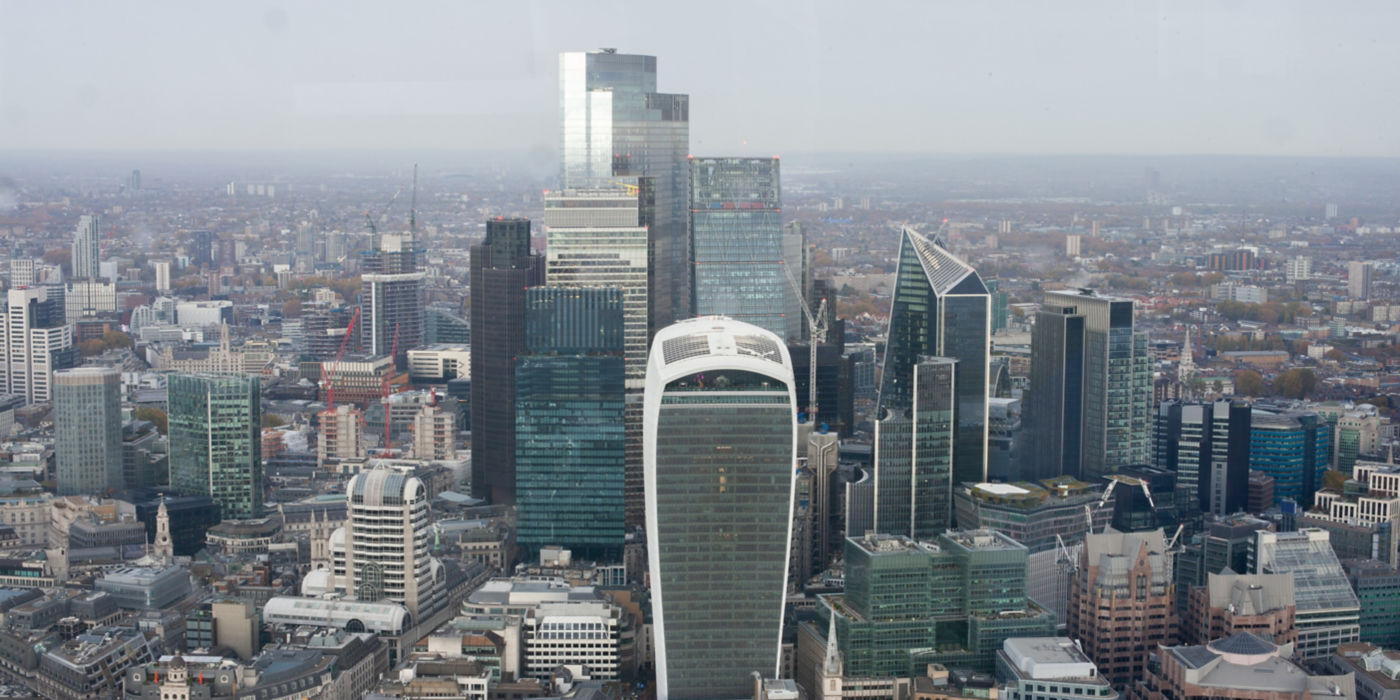
Existing landmark towers do not simply have to catch up with new developments. Because their owners already understand their tenants, traffic patterns and operational needs, lift modernisation can help them create a more tailored people-flow experience and potentially compete from a position of strength.
Two towers, one common goal to stay competitive
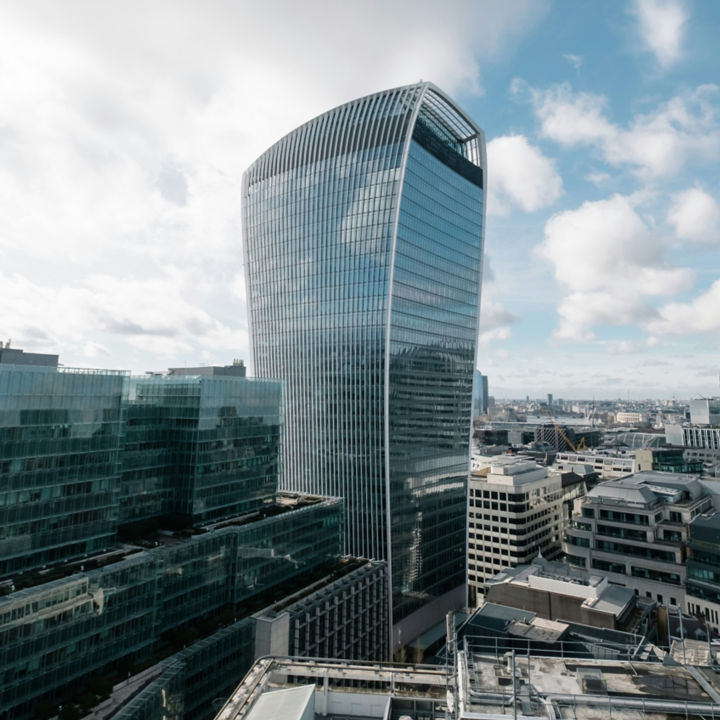
20 Fenchurch Street and The Leadenhall Building, are both located in the City of London and completed construction in 2014. First stop: 20 Fenchurch Street, more affectionately known as the “Walkie-Talkie” provides 38-floors of offices with the iconic Skygarden at its top floors. Works have recently been completed to modernise the 14 double-decker lifts, with two cars connected one above the other, and the destination control system which assigns passengers to lifts before they enter the car. Sean Harlow, head of engineering for the building explains.
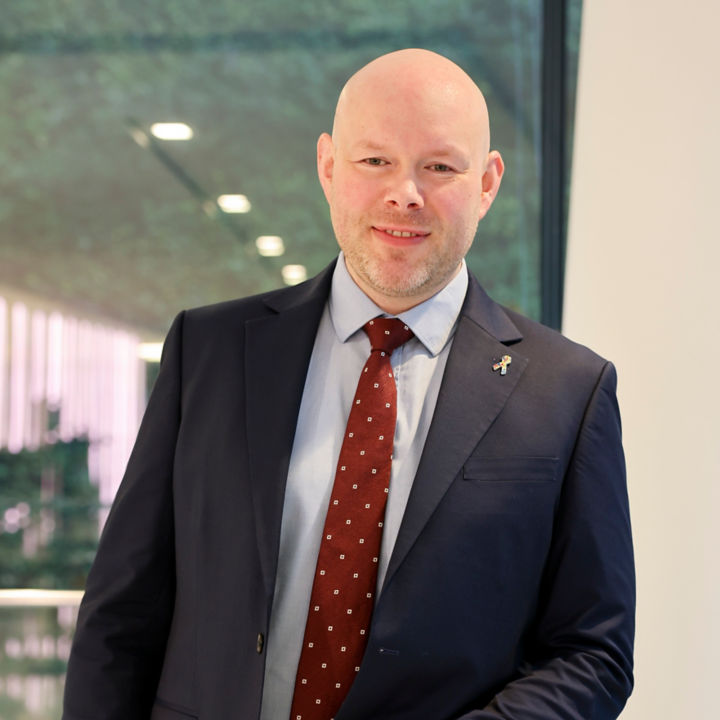
“Our old destination operating panels had become obsolete, and we wanted to be at the forefront of lift technology in this highly competitive space,” Harlow says. “We took the proactive decision to modernise the system. For KONE this was a world first to integrate it into an existing and fully operational building. We worked very closely with KONE and other site partners to develop how multiple systems would connect into the existing building systems. Whilst the project was very challenging, it was nonetheless a very rewarding one, knowing that we've helped pave the way for others to integrate into complex access control and destination control. 20 Fenchurch Street is focused entirely on elevating the user experience and lifts are one of the first touchpoints customers have when stepping into the building. Getting this right is paramount to ensuring the building delivers the best experience to all users.”
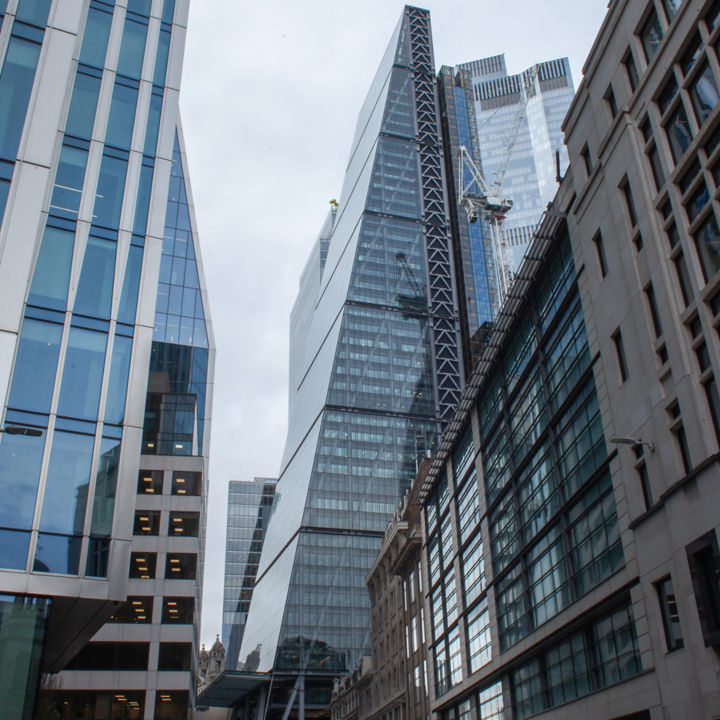
Just around the corner from 20 Fenchurch Street stands one of London’s most recognisable tall buildings: the 51-storey Leadenhall Building, known widely as the “Cheesegrater”. The building features 26 lifts, including striking fully glazed installations that can travel at speeds of up to 8 metres per second.
For Senior Engineering Manager Frank Motlieb, the Leadenhall Building is a testament to innovative engineering and design, where pioneering architectural vision meets complex, highly specialised building systems.
“Everything about the Leadenhall Building is bespoke,” explains Frank.
“KONE specifically designed and engineered our lifts to meet the building’s unique architectural and operational requirements, demanding a specialist approach to maintenance.”
“In a building of this scale, lifts are critical to its day-to-day operation. They represent a potential single point of failure, making their reliability essential to the building’s accessibility and overall occupier experience.”
Why even new towers need lift modernisation
Many of London’s most recognisable towers were built in the 2010s, but they are already undergoing upgrades to stay relevant. Lifts are often among the first systems to be modernised, as buildings adapt to evolving expectations and new ways of working.
“Originally, these office buildings were designed for traditional ‘9-to-5’ schedules with a single lunch rush,” says Samu Salmelin, head of Major Projects, KONE Europe. “Today, flexible hours, hot-desking, and a wider range of on-site amenities like restaurants and gyms create more varied vertical traffic patterns throughout the day.”
Lift modernisation can respond to these changing needs by improving people flow, increasing lift capacity, and providing data that supports more efficient operation and predictive maintenance.
Modernising with minimal disruption to people flow

Motlieb and his team follow a two-year lifecycle plan in close collaboration with KONE. They are now upgrading the destination operating panels on every floor, alongside hoisting ropes, in-car media screens, and back-of-house components.
“It’s about ensuring 10-year operational longevity while carefully managing costs and limiting downtime for occupants.”
For both buildings, minimising disruption for tenants and visitors during the upgrades was a priority.
“We're in a fortunate position at The Leadenhall Building because of the sheer quantity of passenger lifts we have,” Motlieb explains. “We can isolate single units for maintenance or project work while keeping the overall building fully functional. Major work is typically scheduled during off-peak hours, weekends, or after 7:00 PM, when passenger traffic is low.”
At 20 Fenchurch Street, a similar approach helped minimise disruption during the modernisation work.
“The occupiers were fantastic in their understanding of the benefits of these works to ensure the longevity of the building,” Harlow says.
Beyond maintenance: Improving performance and efficiency
Once the modernisation dust settles, Salmelin explains that projects typically deliver three major advantages: high uptime, meaning lifts are reliably available when needed; connectivity enabling continuous health monitoring and predictive maintenance; and long-term planning. “Ultimately, this proactive approach eliminates surprises from both a budget and tenant experience perspective,” he says.
Can connectivity and real-time data also improve energy efficiency? “Absolutely,” says Motlieb. “By analysing run times and traffic routes, we can optimise group dispatching algorithms. KONE’s system smartly dispatches elevators already on their way down to pick up passengers rather than sending an empty car up, which saves significant energy.”
The competitive advantage of a premium tenant experience
In the end, lift modernisation is a strategic move, not least when it comes to a property’s competitive edge. “It all ties back to that ‘street-to-seat’ experience,” says Motlieb.
“High-profile occupiers pay a premium to reside in an iconic building like The Cheesegrater, and nobody wants to wait 5 or 10 minutes for an elevator during peak hours. Modern, fast, and reliable lifts create an unforgettable customer experience from the moment you enter the reception area. Keeping the technology cutting-edge shows continuous investment in the asset.”
Harlow, at 20 Fenchurch Street, agrees that visible investment is vital.
“If you have 'Out of Service' signs on several old DOPs, it gives the wrong impression, and we are in a very competitive market. It's not just about attracting new customers; we already have fantastic customers in our building, it's about ensuring they stay exactly where they are and know we are doing what’s best for them – pioneering new technologies, thinking into the long-term future, so we stay at the forefront of a competitive and demanding market.”
Turning landmark towers into future-ready buildings
As new developments continue to reshape the London skyline, competition for tenants remains fierce. According to Salmelin, however, existing landmark towers hold a unique advantage over new developments.
”The owners and engineering managers already know their tenants and understand how people move in the building. Rather than merely ‘catching up’ with brand-new developments, existing towers can leverage modernisation, real-time data, and tailored people flow to outperform new developments and remain the premier address in the city.”
For landmarks such as 20 Fenchurch Street and the Leadenhall Building, modernisation is more than an upgrade. It is an investment in keeping people moving and the buildings performing at their best for years to come.
Explore how KONE high-rise solutions support reliable, efficient people flow